







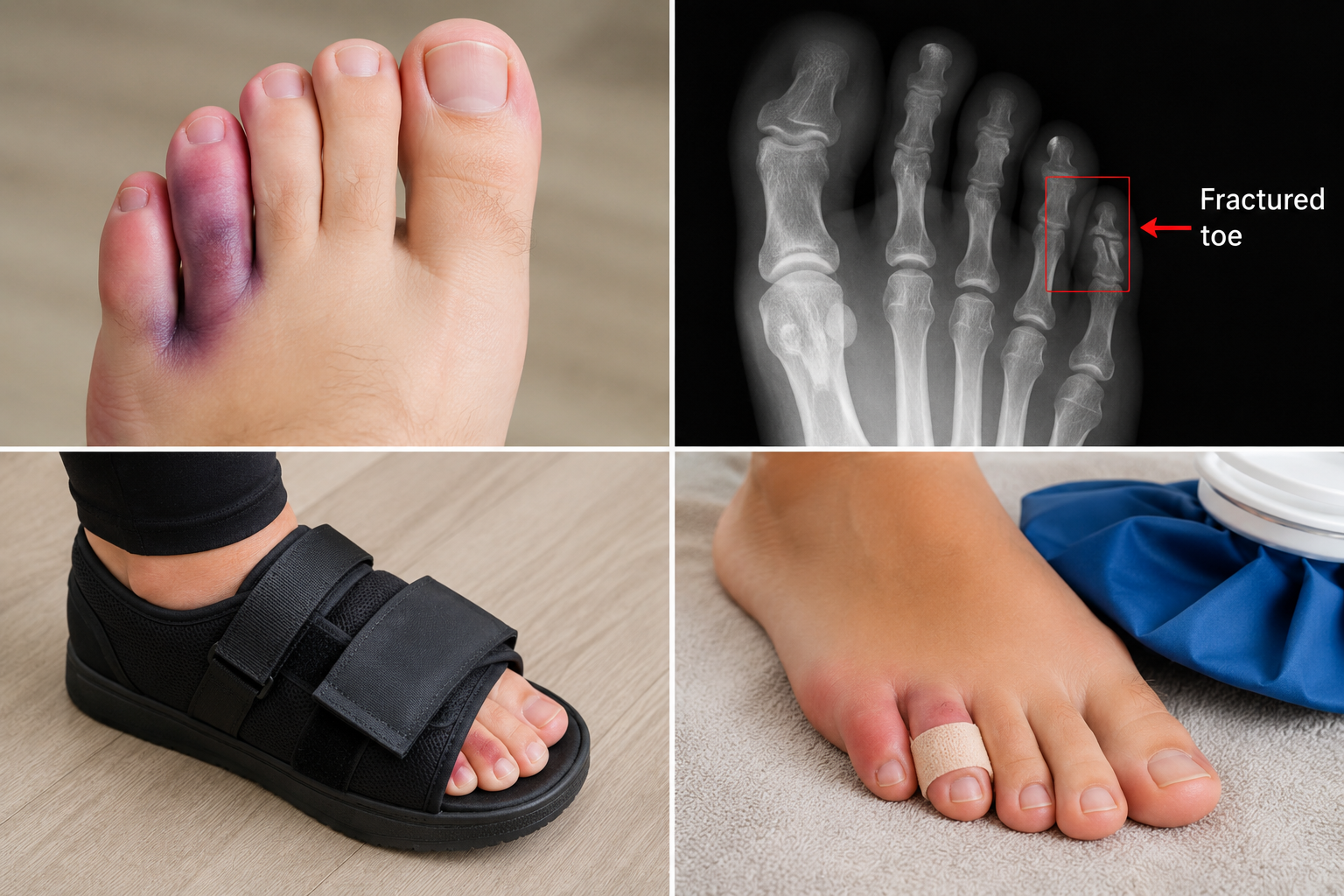
Broken Toe: Symptoms, Treatment, Recovery & Support Products
Published
Broken toe symptoms can range from mild pain to severe swelling and difficulty walking. Learn about diagnosis, treatment, healing time, and products that may help support your recovery.
A broken toe, also known as a toe fracture, is a common foot injury that can occur after dropping a heavy object on your foot, stubbing your toe against furniture, or participating in sporting activities. Although some toe fractures are relatively minor, others require medical assessment and appropriate support to ensure proper healing.
Knowing how to recognise the symptoms of a broken toe and understanding the available treatment options can help reduce pain, prevent complications, and support recovery.
What Is a Broken Toe?
Each foot contains 14 toe bones (phalanges), and any of these bones can fracture when subjected to excessive force. A broken toe may involve a small crack in the bone or a complete fracture.
The injury can affect any toe, but fractures of the big toe are generally more serious because the big toe plays an important role in balance and walking.
Common Causes of a Broken Toe
A broken toe may occur due to:
Dropping a heavy object onto the foot
Stubbing the toe against furniture or steps
Sports injuries
Falls or accidents
Twisting injuries
Crush injuries in the workplace
Repetitive stress (stress fractures)
Symptoms of a Broken Toe
Symptoms can vary depending on the severity of the fracture but commonly include:
Pain
Immediate pain is usually the first symptom. The pain may become worse when walking, standing, or putting weight on the foot.
Swelling
The injured toe often becomes swollen within a few hours after injury.
Bruising
Bruising around the toe or extending into the foot is common following a fracture.
Difficulty Walking
Walking may become painful, especially if the fracture involves the big toe.
Tenderness
Touching or moving the injured toe may cause significant discomfort.
Deformity
In more severe fractures, the toe may appear crooked or out of alignment.
Reduced Movement
The injured toe may become stiff and difficult to bend.
When Should You See a Healthcare Professional?
Medical assessment is recommended if:
The toe appears deformed
Pain is severe or worsening
You cannot bear weight
There is an open wound
Symptoms do not improve after several days
The injury involves the big toe
You have diabetes or poor circulation
An X-ray may be required to determine the severity of the fracture.
Products That May Help Support Recovery
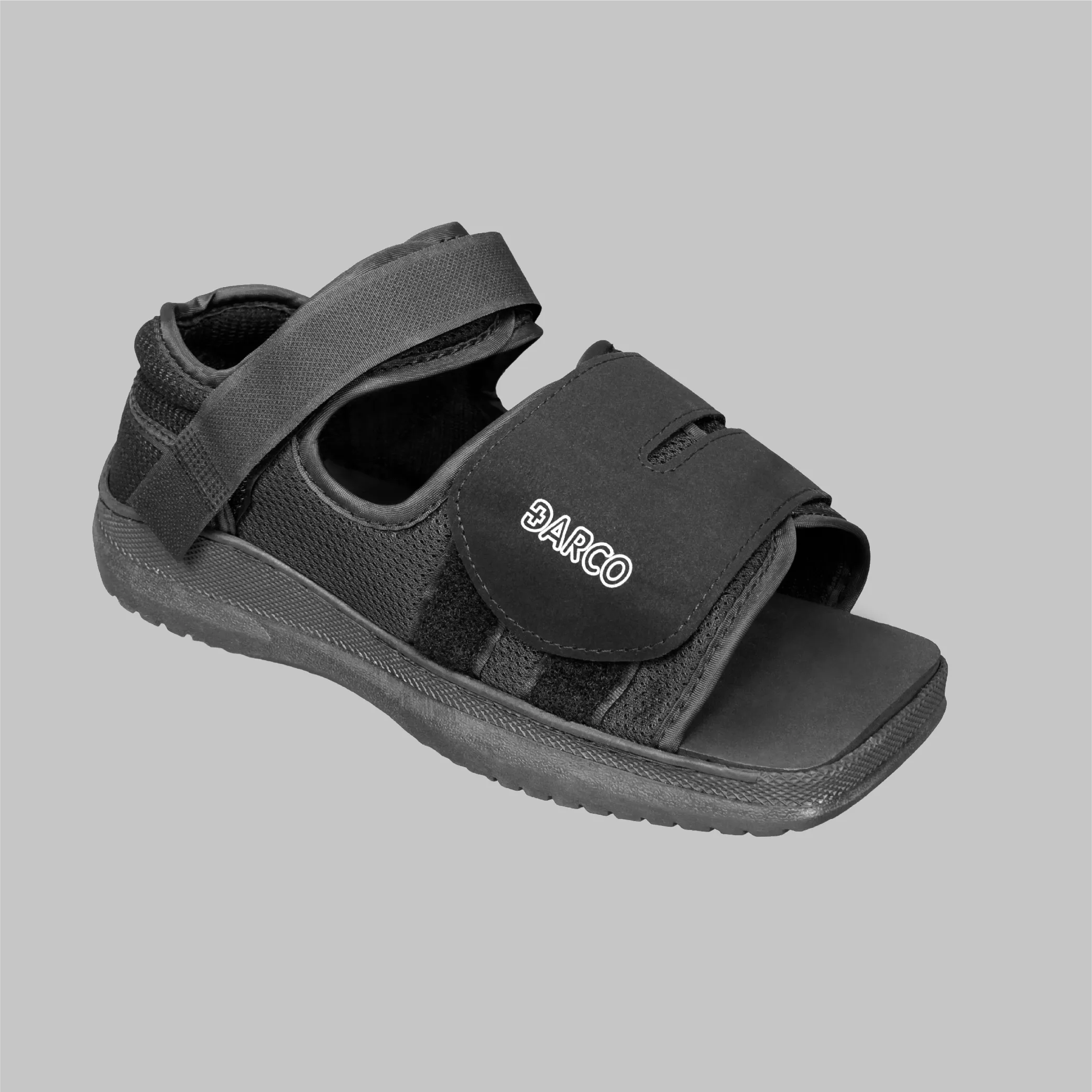
1. Darco MedSurg Shoe
The Darco MedSurg Shoe is designed to help protect the foot after injury or surgery. Its rigid sole helps reduce pressure on the forefoot while allowing safer and more comfortable walking during recovery.
2. Darco All Purpose Shoe
The Darco All Purpose Shoe offers support and protection for injured feet while allowing room for dressings or swelling. It can be useful following minor toe fractures or foot injuries as advised by a healthcare professional.
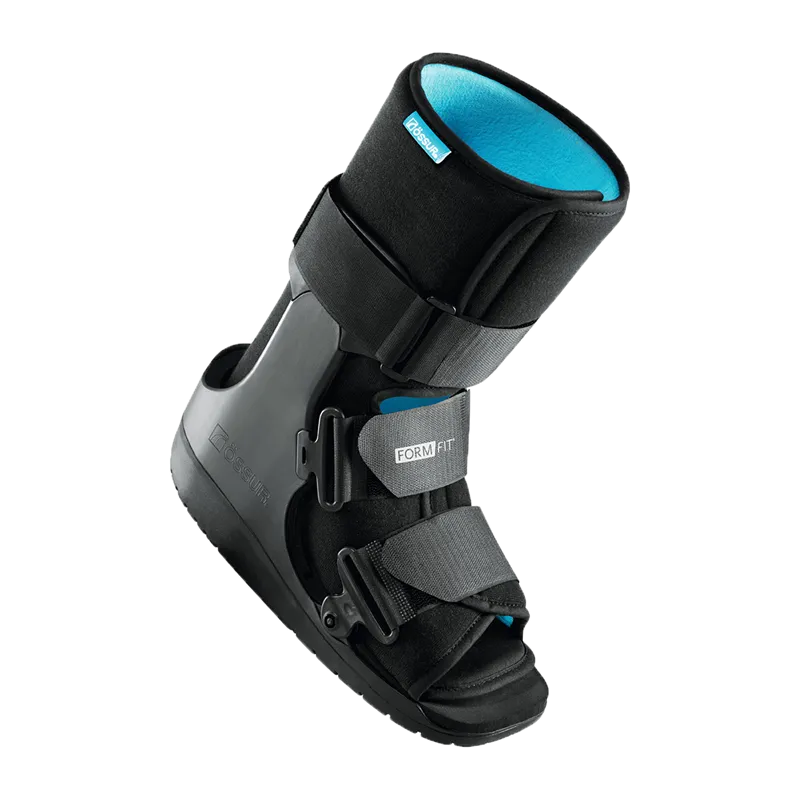
 3. Moon Boot (Walker Boot)
For more significant injuries or fractures, a Moon Boot may be recommended to help immobilise the foot and reduce movement while healing. Always follow the advice of your healthcare professional regarding its use.
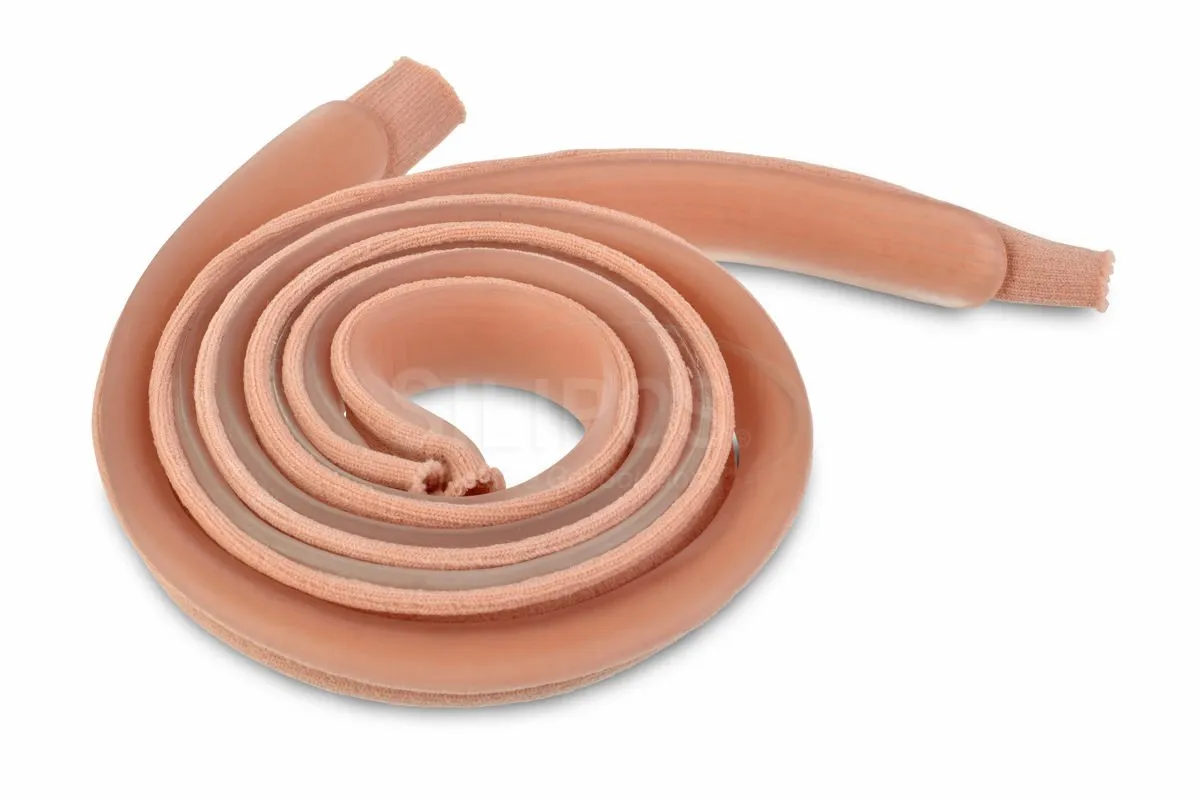
4. Gel Toe Products
Gel toe products can help cushion sensitive toes, reduce pressure from footwear, and improve comfort during recovery. They may also help minimise friction while the injured area heals.
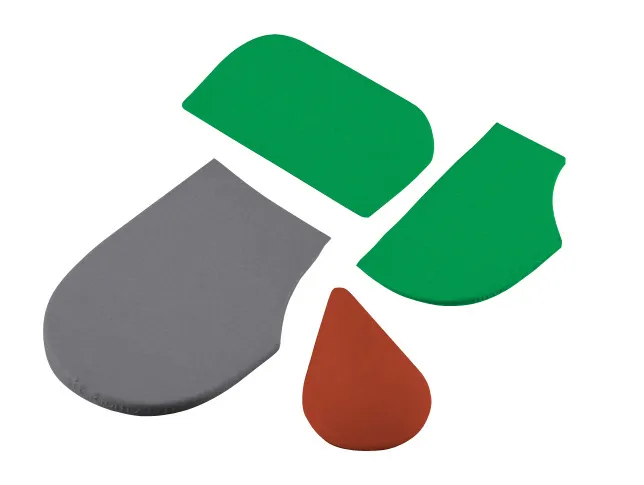
5. Carbon Foot Plate
A Carbon Foot Plate is a lightweight, rigid insert that fits inside many types of footwear to help limit movement of the forefoot and toes during walking. By reducing excessive bending of the toes, it may help decrease discomfort and protect the injured area while healing.
Carbon Foot Plates are commonly used for certain toe fractures, forefoot injuries, turf toe, and other conditions where restricting toe motion is beneficial. They can often be worn inside everyday shoes, providing additional support without the bulk of a walker boot.
Your healthcare professional can advise whether a Carbon Foot Plate is appropriate for your specific injury and recovery plan.
Tips for Recovering From a Broken Toe
Recovery often involves:
Resting the injured foot
Applying ice for 15–20 minutes several times a day
Elevating the foot to reduce swelling
Wearing supportive footwear
Avoiding high-impact activities until healing has occurred
Following your healthcare provider's recommendations
Recovery time varies depending on the type of fracture but may take 4–8 weeks.
Frequently Asked Questions
1. Can you walk on a broken toe?
It depends on the severity of the fracture. Many people are still able to walk with a broken toe, although it can be painful. Continuing to walk without appropriate support may delay healing or worsen the injury. Wearing a supportive post-operative shoe or Moon Boot, when recommended by your healthcare professional, may help protect the injured toe during recovery.
2. How do I know if my toe is broken or just bruised?
A bruised toe and a broken toe can have similar symptoms, including pain, swelling, and bruising. However, a broken toe is more likely to cause:
Severe or persistent pain
Difficulty walking
Swelling that lasts several days
Visible deformity
Pain when putting weight on the foot
An X-ray is the most reliable way to confirm whether a toe is fractured.
3. Should I tape a broken toe?
For some minor fractures, a healthcare professional may recommend "buddy taping," where the injured toe is gently taped to the neighbouring toe for support. However, buddy taping is not suitable for every fracture, particularly if the toe is displaced or severely injured.
Always seek professional advice before taping a suspected broken toe.
4. How long does a broken toe take to heal?
Most uncomplicated toe fractures heal within 4 to 6 weeks, while fractures involving the big toe or more severe injuries may take 6 to 8 weeks or longer.
Healing time depends on:
The type of fracture
Which toe is injured
Your age
Overall health
Following your treatment plan
Returning to sport or heavy physical activity too soon may delay recovery.
5. Do all broken toes need an X-ray?
Not always. Minor fractures may be diagnosed based on your symptoms and a physical examination. However, an X-ray is often recommended if:
The pain is severe.
The toe looks deformed.
You cannot walk comfortably.
The injury involves the big toe.
The fracture is suspected to be displaced.
Your healthcare professional will determine whether imaging is necessary.
6. What shoes should I wear with a broken toe?
During recovery, supportive footwear is important to protect the injured toe.
Depending on your injury, your healthcare professional may recommend:
A post-operative shoe such as the Darco MedSurg Shoe
A Darco All Purpose Shoe
A Moon Boot (Walker Boot) for more significant injuries
Avoid wearing tight, narrow, or high-heeled shoes until your toe has completely healed.
7. Can a broken toe heal without treatment?
Many simple toe fractures heal naturally with rest and protection. However, some fractures require medical treatment to ensure the bones heal correctly.
Ignoring a broken toe may increase the risk of:
Poor bone alignment
Chronic pain
Joint stiffness
Arthritis
Difficulty walking
If you suspect a broken toe, it is always advisable to seek medical assessment.
8. What should I do immediately after breaking my toe?
If you think you have broken your toe:
Stop the activity immediately.
Rest your foot.
Apply an ice pack for 15–20 minutes.
Elevate your foot above heart level.
Avoid unnecessary walking.
Wear supportive footwear if possible.
Seek medical advice if pain is severe or the toe appears deformed.
Early management may help reduce swelling and improve recovery.
9. Can I exercise with a broken toe?
High-impact activities such as running, jumping, football, or tennis should generally be avoided until your healthcare professional advises it is safe.
Low-impact activities may sometimes be possible during recovery, depending on the type of fracture. Always follow the advice of your healthcare provider.
10. When should I see a doctor for a broken toe?
Seek medical attention if:
Your toe appears bent or out of alignment.
You are unable to bear weight.
Pain is severe or getting worse.
There is significant swelling or bruising.
The injury involves your big toe.
There is an open wound or bleeding.
You have diabetes, poor circulation, or reduced sensation in your feet.
Prompt assessment helps reduce the risk of long-term complications.
11. Can children break their toes?
Yes. Broken toes are common in children due to sports, playground activities, and accidental injuries. Because children's bones are still growing, it is important to have suspected fractures assessed by a healthcare professional to ensure proper healing.
12. What happens if a broken toe is left untreated?
Without appropriate care, a broken toe may heal in the wrong position, leading to:
Ongoing pain
Reduced toe movement
Difficulty wearing shoes
Problems with walking
Arthritis in the affected joint
Long-term foot discomfort
Seeking timely treatment can help minimise these risks.
13. Can supportive products help during recovery?
Supportive products may help improve comfort and protect the injured foot during the healing process. Depending on the injury and advice from your healthcare professional, products that may assist include:
Darco MedSurg Shoe
Darco All Purpose Shoe
Moon Boot (Walker Boot)
Gel Toe Protection Products
These products are designed to reduce pressure on the injured area, improve stability, and support mobility during recovery.
Broken Toe Products Available at Actimed Australia
Actimed Australia supplies a range of products that may assist during recovery from toe injuries, including post-operative shoes, Moon Boots, gel toe protection products, and foot supports.
Browse our range online or contact our team for assistance in selecting the most suitable product for your recovery needs.
Disclaimer: This article is intended for general information only and should not replace professional medical advice. If you suspect you have a broken toe or experience severe pain, deformity, or ongoing symptoms, consult a qualified healthcare professional for assessment and treatment.
📞 Contact Actimed Australia today at sales@actimed.com.au or call 08 9244 3982 for a free quote.
🛒 Shop directly on our Actimed website or visit our Osborne Park medical supply store to try products in person before you buy.
📍 Store Address:
Actimed Australia
25 Guthrie Street,
Osborne Park WA 6017, Australia
Ph : 08 9244 3982