| Code | Description | Price | Status | Quantity | |
|---|---|---|---|---|---|
|
|
|
|
|||
|
|
|
|
|||
|
|
|
|
|||
|
|
|
|
|||
|
|
|
|
|||
|
|
|
|
|||
|
|
|
|
|||
|
|
|
|
Mallet
splints are great for treating injuries to the final joint of the finger.
So if you have an extensor tendon strain or similar finger injury, read
on to make sure you get a splint that fits correctly.
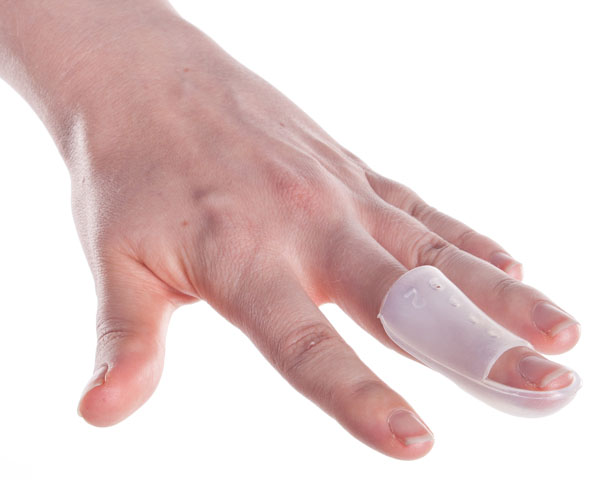
The most common form of
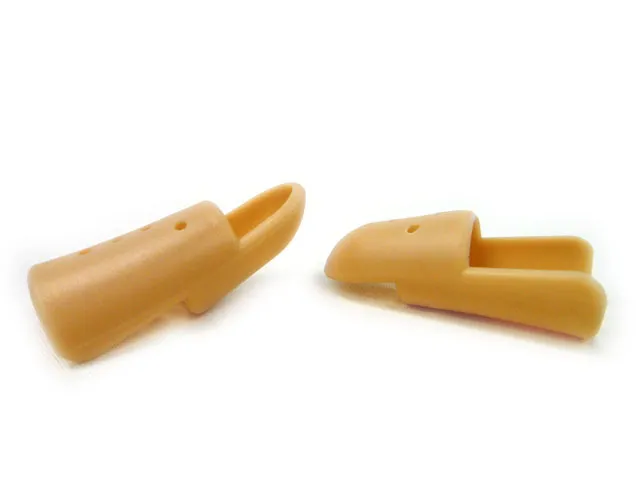
purpose-made mallet splint is a type sometimes called a stax splint. This is
the type of mallet splint we sell, and this blog post explains how to choose
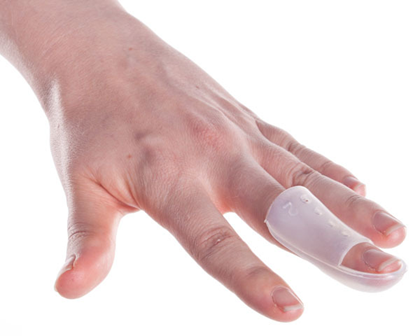
the correct size. The stax splint is simple and effective – it semi-encloses
the end of the finger in a rigid, plastic shell to hold it straight in a good
healing position and protect it from further damage (as pictured.) There are
ventilation holes in the shell to keep it breathable and help prevent skin
maceration.
Sizing Instructions
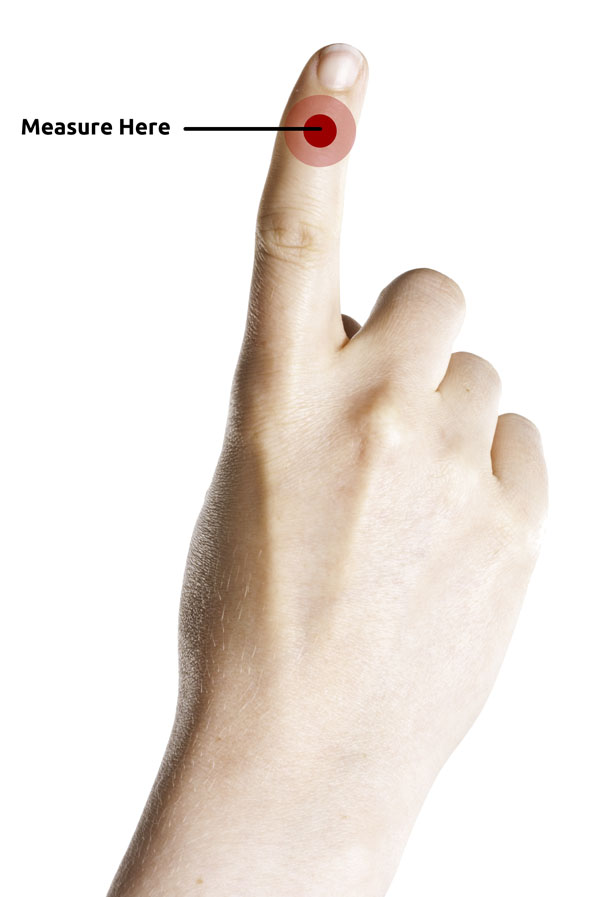
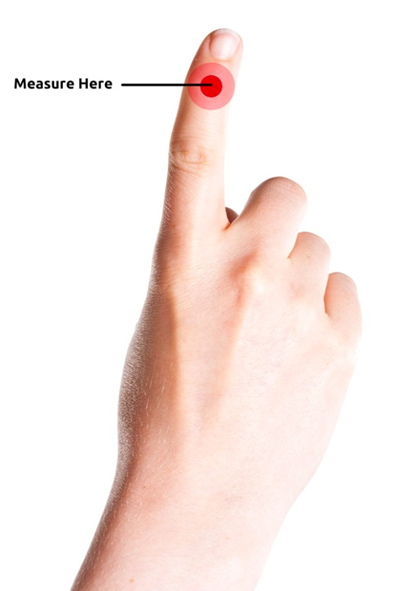
1) Mallet splints need to fit fairly precisely, so you must measure the
injured finger. Do not guess. You need to measure around the part of
your finger known as the distal interphalangeal joint, or DIP joint. This is
the final joint before your fingertip. See picture:
2) It is difficult to measure around your own finger, because you’ll be working one-handed. Therefore, it is best if you get someone to help. A good tool for the job is a flexible tape measure of the type found in most sewing kits. If you don’t have one, you can use a piece a string instead: wrap it around the DIP joint, mark it with a pen and measure off against a rule.
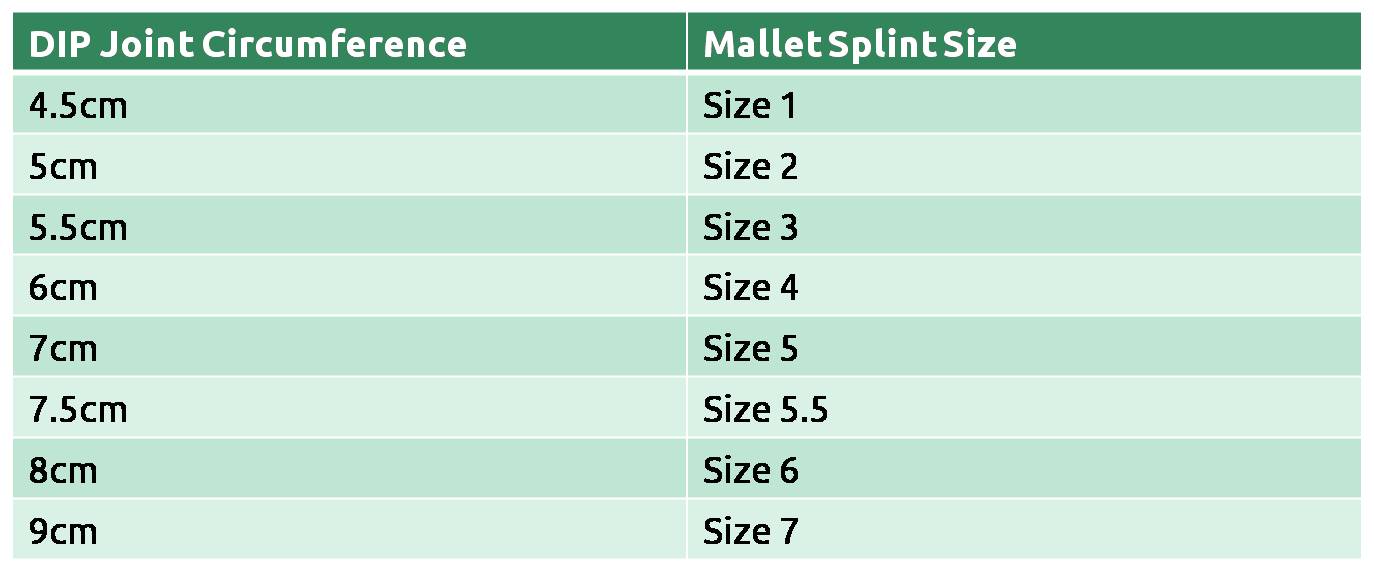
3) Once you have measured the circumference of the DIP joint, find that
measurement in the following table and read off the corresponding size
number. This is the size of mallet splint you need to order.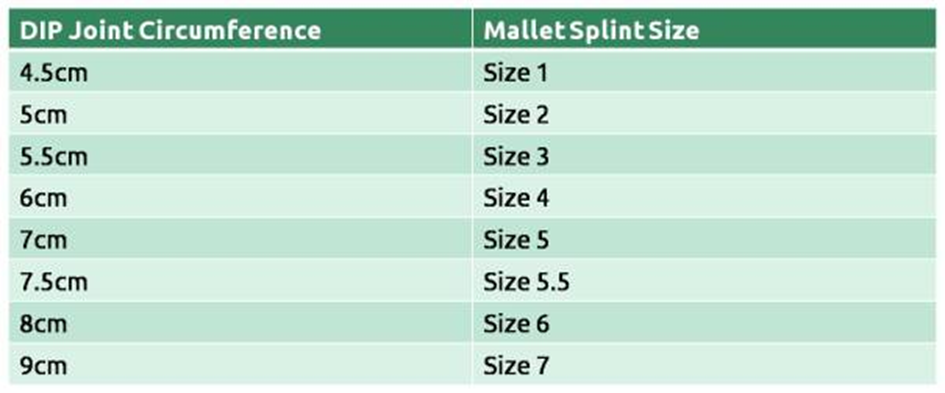
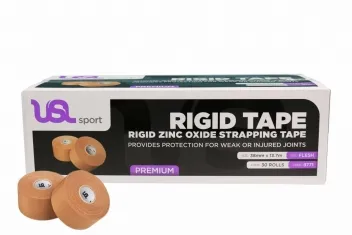
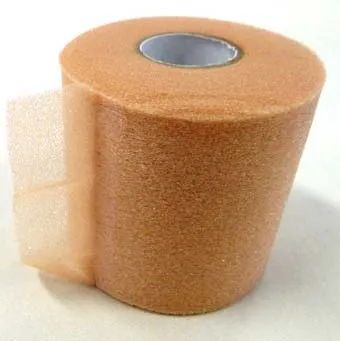
4) Mallet splints fit closely, so if you fall between two sizes it is best to order the larger of the two. If necessary you can “pack out” the splint slightly by wrapping a turn or two of zinc oxide tape around your finger. (Or use foam underwrap for greater thickness.)
5) If you feel the mallet splint might slip off, you can lightly tape it on. Around the top part of the splint, between the finger joints, is the best place to do this. Use zinc oxide tape or micropore.
6) That’s it. But we offer one note of caution. Mallet splints are
suitable for all manner of injuries to the end of the finger. However, if you
suspect you have a case of actual mallet finger (i.e. an injury that prevents
you from fully straightening the final joint of the finger unassisted) then you
should also see a doctor at your earliest possible convenience. Mallet finger
can lead to permanent loss of function if not properly and carefully treated –
your finger will need to be held straight at all times.
Select the products that suit your needs and add them to your cart together.
Mallet Finger Splint
Uses the option selected above
A$12.17
A$0.00
Items remain separate in your cart and are subject to availability.
Related Items
Shop by Brands