




How to Choose the Right Knee Brace: Types, Uses and Sizing Guide
Compare knee sleeves, patella supports, hinged braces and ROM braces, then learn how to measure for a secure fit and choose the right level of support.
Choosing the right knee brace starts with the level and location of support you need. A flexible knee sleeve may provide light compression for everyday activity, an open-patella support can help guide the kneecap, and a hinged brace offers greater side-to-side stability. After an injury, operation or sudden change in symptoms, ask a physiotherapist, doctor or other qualified health professional which design is appropriate before buying.
This guide explains the main types of knee braces, their common uses and how to measure for a comfortable fit. You can also shop Actimed Australia's knee supports online or visit our Osborne Park showroom for fitting assistance.
Quick answer: which knee brace should I choose?
| Your priority | Brace type to consider | Typical features |
|---|---|---|
| Light everyday support | Elastic knee sleeve | Flexible compression and a low-profile design |
| Kneecap guidance | Open-patella support or stabiliser | An opening or buttress around the kneecap |
| Below-kneecap support | Patella strap | A narrow adjustable band below the kneecap |
| Mild side-to-side stability | Brace with stays or spiral supports | Flexible reinforcement along the sides |
| Greater ligament support | Hinged knee brace | Mechanical hinges and adjustable straps |
| Controlled rehabilitation movement | Range-of-motion brace | Adjustable bending and straightening settings; professional guidance recommended |
| Temporary restriction of movement | Knee immobiliser | Rigid supports designed to limit bending; use when directed by a clinician |
The right choice depends on your diagnosis, activity, body shape and clinician's advice. A brace should not be used to self-diagnose persistent or serious knee pain.
What does a knee brace do?
A knee brace is a wearable support designed to provide compression, guide the kneecap, improve awareness of knee position or help limit unwanted movement. Different braces perform different jobs, so a larger or more rigid brace is not automatically better.
A brace may be one part of a broader plan that includes activity changes, exercise, rehabilitation or medical treatment. It does not replace an assessment when pain is severe, persistent or caused by a significant injury.
Types of knee braces and their common uses
1. Elastic knee sleeves
Elastic sleeves slide over the leg and provide gentle, even compression without bulky hinges. People commonly choose them for light support during walking, work, exercise or everyday activities. They may fit beneath clothing more easily than structured braces.
A sleeve should feel secure without causing numbness, tingling or skin-colour changes. Compare options such as the JS Sports Elastic Knee Support.
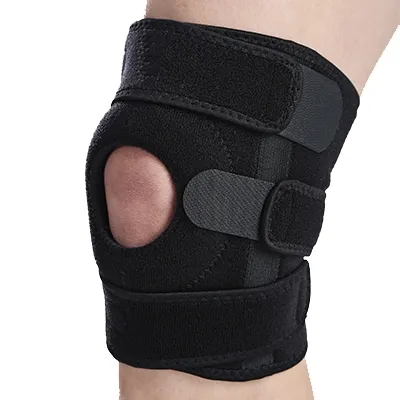
2. Open-patella knee supports
An open-patella brace has an opening over the kneecap. Depending on its design, the opening or surrounding buttress may help position the support and guide the patella while leaving the kneecap uncovered.
Examples include the JS Sports Open Patella and JS Sports Patella Stabiliser.
3. Patella straps
A patella strap is a narrow band worn below the kneecap. It is smaller than a full sleeve and may appeal to someone seeking targeted support without covering the whole joint. Correct placement matters: never tighten it until it causes pins and needles, throbbing or lost sensation. Compare Actimed's patella straps.
4. Supports with stays or spiral reinforcement
Side stays or spiral supports add reinforcement while remaining more flexible than many hinged braces. This design can suit people wanting compression plus mild medial and lateral support. One option is the JS Sports Knee Support With Spiral.
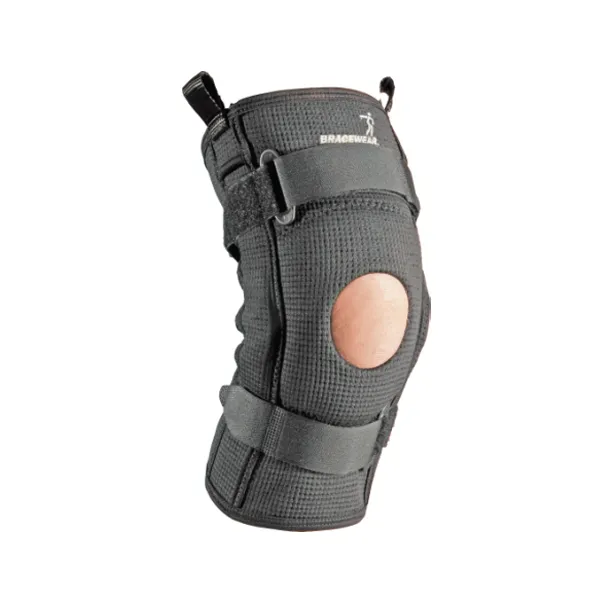
5. Hinged knee braces
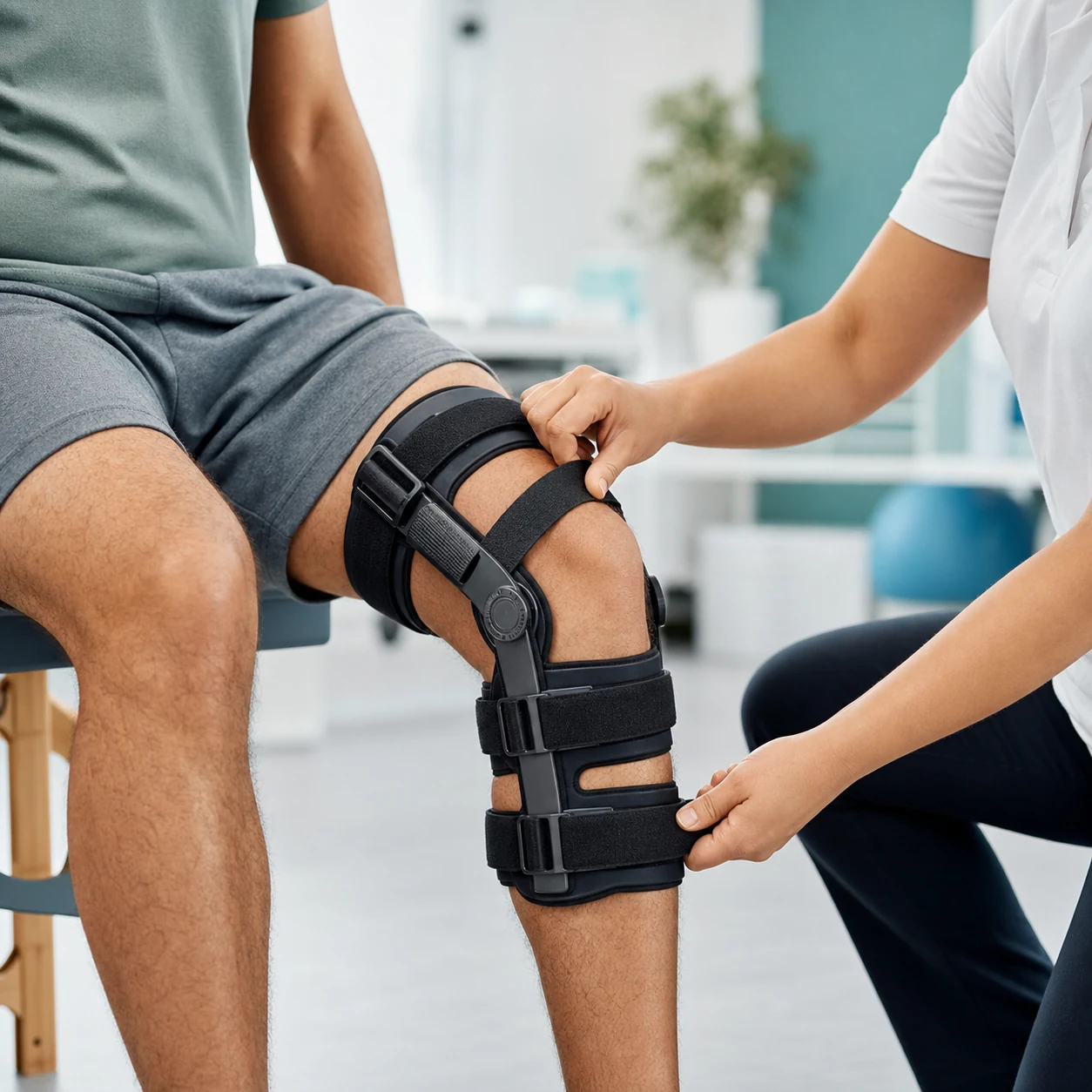
Hinged braces have supports on each side of the knee to help control side-to-side movement. They are more structured than elastic sleeves and may be considered when greater stability is required.
Because ligament injuries and post-operative requirements differ, obtain professional advice before choosing a hinged design. Actimed options include the Air-X Bracer Hinged Knee, described as a lightweight brace for activities requiring mild medial and lateral support, and the JS Sports Hinged Knee Support.
6. Range-of-motion knee braces
A range-of-motion, or ROM, brace has adjustable settings that control how far the knee bends or straightens. These braces may be used during rehabilitation or following certain injuries and procedures. Settings should follow instructions from a surgeon, physiotherapist or treating clinician. Browse ROM knee braces.
7. Knee immobilisers
A knee immobiliser is designed to substantially limit movement. It is not an everyday compression sleeve and should generally be selected and used under clinical direction. Actimed carries the Rebound Knee Immobiliser for customers whose healthcare professional has recommended this kind of support.
How to choose a knee brace in five steps
Step 1: Identify why you need support
Start with the problem you want to solve: light compression, kneecap guidance, support during sport, side stability or controlled movement during rehabilitation. If you do not know the cause of your symptoms, seek an assessment rather than choosing only by pain location.
Step 2: Match the brace to your activity
A lightweight sleeve may be easier under work clothes, while a structured brace may be appropriate when a clinician recommends additional stability. Consider how long you will wear it, how deeply you need to bend and whether heat or bulk will affect comfort.
Step 3: Check the exact sizing chart
Knee-brace sizing is not universal. A medium in one product may differ from a medium in another. Always use the chart for the exact product you plan to purchase.
Step 4: Compare pull-on and wraparound access
Pull-on sleeves must pass over the foot and calf. A wraparound or anterior-entry design may be easier for someone with reduced hand strength, swelling or limited mobility. Check that the fasteners are practical for the intended wearer.
Step 5: Ask for help when unsure
Actimed Australia's showroom at 25 Guthrie Street, Osborne Park, WA lets customers compare supports and try products for size. You can also call 08 9244 3982 or email sales@actimed.com.au before ordering.
How to measure for a knee brace
- Read the individual product instructions. You may need to measure around the joint, above the kneecap, below it or at several points.
- Use a soft measuring tape. Keep it flat against the skin without pulling it tight.
- Use the position shown in the sizing guide. Keep the muscles relaxed unless instructed otherwise.
- Record the result in centimetres. Compare it with the exact product chart rather than your clothing size.
- If you fall between sizes, ask before ordering. The answer can depend on the brace design, swelling and intended compression.
How should a knee brace fit?
A properly fitted brace should feel secure and remain in position during normal movement. It should not cause numbness, tingling, increased pain, coldness, marked swelling, deep pressure marks or blue or pale skin. Stop using the brace and seek advice if these occur.
Recheck the fit if swelling changes during the day. Follow the manufacturer's care instructions because stretched fabric, worn fasteners or damaged hinges can affect performance.
Common knee-brace buying mistakes
- Buying by clothing size: use the product-specific measurement chart.
- Choosing maximum support by default: a more rigid brace may unnecessarily restrict movement.
- Ignoring left, right or universal fitting: check the product specification.
- Overtightening straps: tighter does not necessarily mean more effective.
- Using a brace to avoid assessment: persistent pain, instability or swelling needs professional attention.
- Assuming every brace is suitable for sport: match the design to your activity and clinician's advice.
When should you seek medical advice?
Seek prompt medical care after a major injury, if the knee looks deformed, if you cannot bear weight, or if the joint is very swollen, hot or red. Arrange an assessment if the knee repeatedly gives way, locks, has reduced sensation, or if pain persists or worsens.
A clinician can assess the cause and advise whether a brace, exercise program, imaging or another form of care is appropriate.
Frequently asked questions about knee braces
What is the best knee brace for everyday support?
For light everyday support, many people compare elastic sleeves and open-patella supports. The best option depends on the reason for use, required compression and correct product-specific size.
Should I choose a knee sleeve or a hinged brace?
A sleeve generally provides flexible compression, while a hinged brace offers more structured side support. A health professional should guide the choice for ligament instability, a significant injury or post-operative needs.
Can I wear a knee brace all day?
Wear time depends on the product and your clinician's instructions. Remove or loosen the brace and seek advice if you develop numbness, irritation, increased swelling, colour change or worsening pain.
Can I sleep in a knee brace?
Only sleep in a brace when the manufacturer or treating clinician recommends it. Some post-operative braces are prescribed overnight, whereas ordinary sports supports may not be intended for sleep.
Can I wear a knee brace over clothing?
Some structured braces can be worn over thin, close-fitting clothing, but many sleeves work best directly against the skin. Ensure the material does not cause slipping, bunching or pressure points.
How do I stop a knee brace from slipping?
Confirm the size, placement and strap sequence. Slipping can happen when the brace is too large, positioned incorrectly or worn over loose fabric. If the correct size still slips, a different shape may suit your leg better.
Shop knee braces and supports in Australia
Actimed Australia supplies knee sleeves, patella supports, hinged braces, ROM braces and rehabilitation products for healthcare professionals and home users. Browse knee braces and supports online, contact our team for product information, or visit our Osborne Park showroom for fitting assistance.
Healthcare professional? Register or sign in for eligible practitioner and wholesale pricing. Australia-wide delivery is available, with estimates varying by location and item size.
Disclaimer: This article provides general information only and is not a substitute for diagnosis or personalised medical advice. Product suitability varies. Follow the manufacturer's instructions and consult a qualified healthcare professional if you have an injury, ongoing symptoms, circulation or sensation problems, or uncertainty about which brace to use.
Actimed Australia
25 Guthrie Street, Osborne Park WA 6017
Phone: 08 9244 3982
Email: sales@actimed.com.au